Roth Conversions Explained: How to Lower Your Lifetime Tax Bill in Retirement
A Roth conversion moves money from a pre-tax IRA or 401(k) into a Roth IRA — you pay tax now so the money grows tax-free forever. Done in the right years, it can cut your lifetime tax bill dramatically.
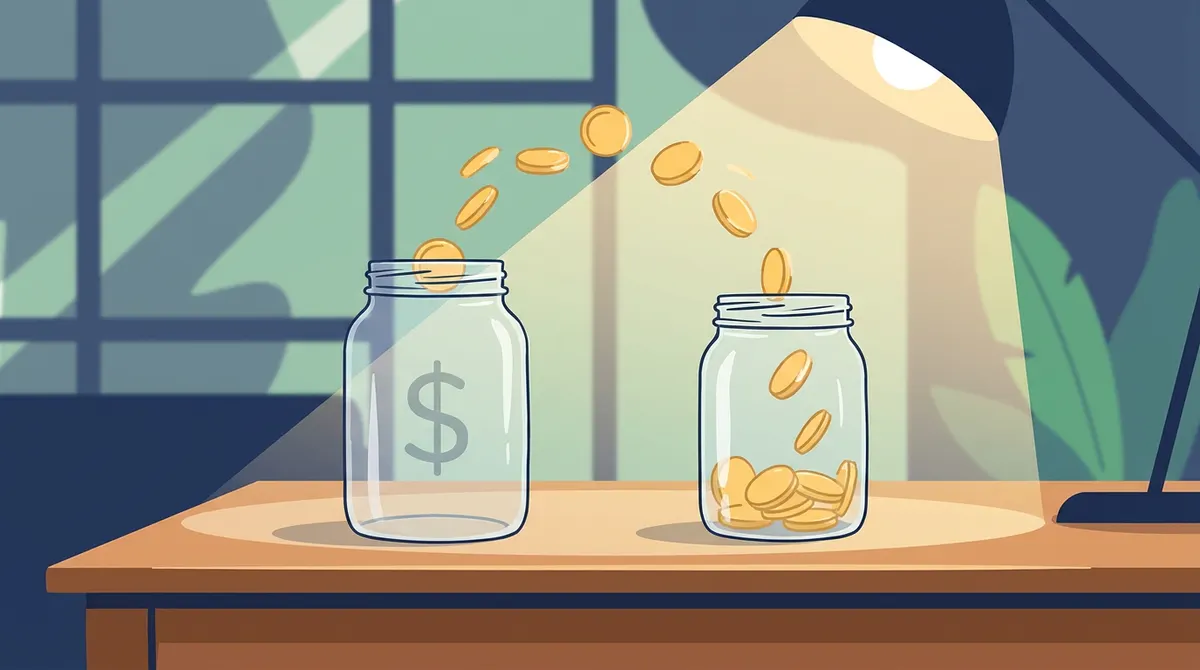
What a Roth conversion actually does
A Roth conversion moves money from a pre-tax account (traditional IRA, 401(k), 403(b)) into a Roth IRA. The amount you convert is added to your taxable income in the year of the conversion — you pay ordinary income tax on it now. In exchange, the converted dollars (and all future growth) come out completely tax-free in retirement, and Roth IRAs have no required minimum distributions during your lifetime.
Why anyone would volunteer to pay tax early
Because tax rates are not constant across your life. Most retirees pass through a low-tax window: the years after they stop working but before Social Security and RMDs begin. In those years your taxable income may be very low — sometimes near zero — which means the 10%, 12%, and 22% brackets are sitting empty.
Converting during that window means paying 10–22% on money that would otherwise be forced out later by RMDs at 24%, 32%, or higher — potentially stacked on top of Social Security and pension income.
The bracket-filling strategy
The classic approach is to "fill" a target bracket each year:
- Estimate your taxable income before conversions (interest, dividends, part-time work, etc.)
- Subtract that from the top of your target bracket (for example, the top of the 12% or 22% bracket)
- Convert roughly that difference — no more
This spreads the conversion over several years instead of triggering a huge one-year tax spike.
What to watch out for
- IRMAA surcharges. Conversion income counts toward the Medicare premium thresholds two years later. A large conversion at 63 can raise your Part B and D premiums at 65.
- The 5-year rule. Each conversion has its own 5-year clock before the converted principal can be withdrawn penalty-free if you are under 59½.
- Paying tax from the IRA itself. Ideally pay the conversion tax from a taxable account so the full converted amount keeps growing tax-free.
- ACA premium credits. If you are on a marketplace health plan before 65, conversion income can reduce your subsidy.
- State taxes. If you plan to move from a high-tax state to a no-tax state, the timing of conversions relative to the move matters.
Who benefits most
Roth conversions tend to be most valuable when:
- You retire before 65 and have several low-income years ahead
- Your pre-tax balances are large enough that future RMDs would push you into higher brackets
- You want to leave tax-free assets to heirs (inherited Roth IRAs are far friendlier than inherited traditional IRAs under the 10-year rule)
- You expect tax rates to rise
The bottom line
Roth conversions are one of the few levers that let you choose when to pay tax. The math depends on your specific balances, ages, and income timeline — which is exactly what a year-by-year projection is built to test. Run your plan with and without a conversion strategy and compare lifetime taxes, not just this year's bill.